
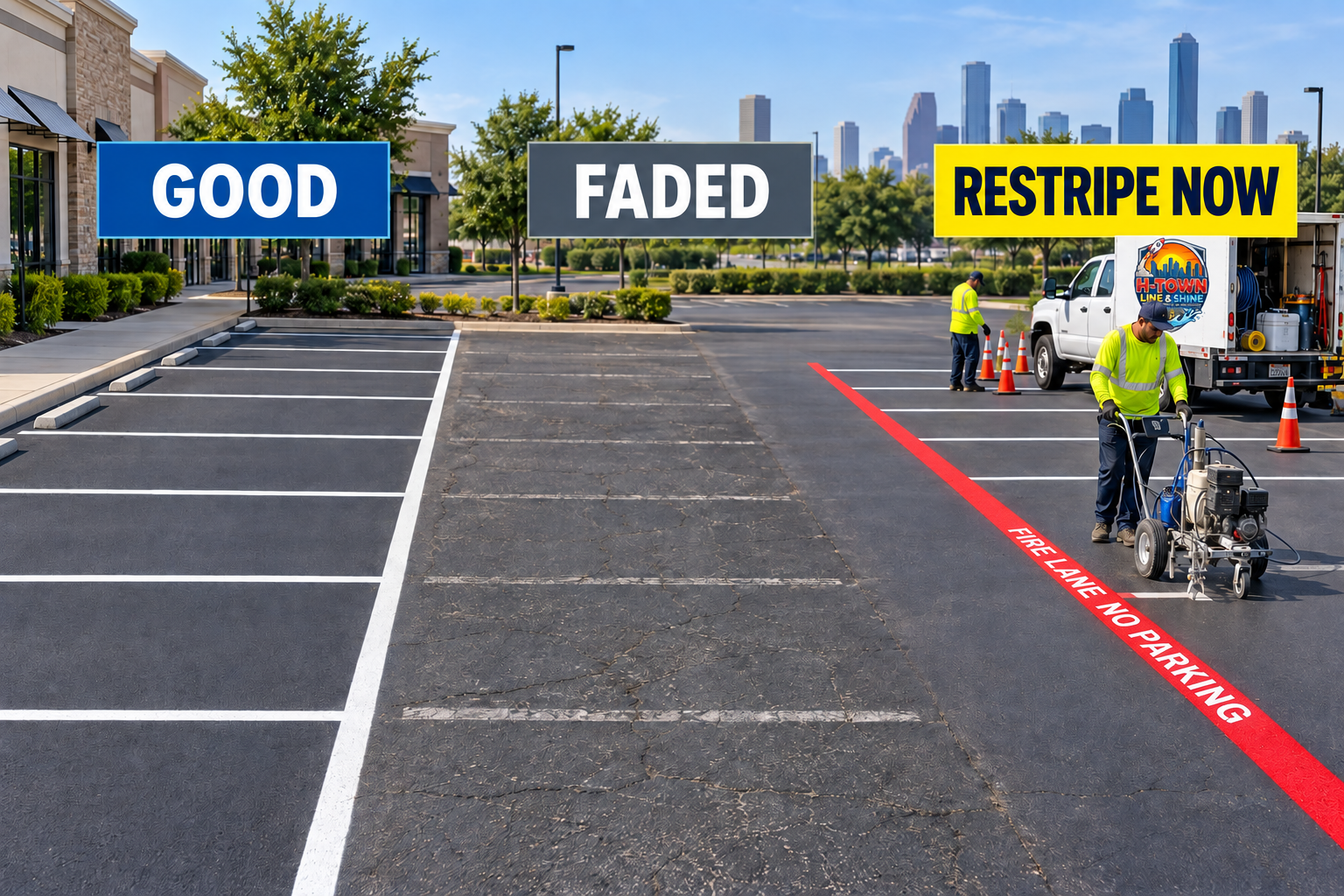
Short answer: Most commercial parking lots in Greater Houston should be inspected every year and restriped about every 18 to 24 months. High-traffic entrances, drive lanes, ADA markings, fire lanes, loading zones, and full-sun areas may need attention sooner. Light-use areas can last longer.
I would rather give a property manager a straight answer than sell a calendar date. Parking lot stripes do not expire on a birthday. The right time to restripe depends on what drivers can still see, how the property is used, and what Houston weather has done to the surface.
Why parking lot stripes fade faster in Houston
Strong UV exposure slowly breaks down color and contrast. Heat, heavy rain, drainage problems, turning tires, delivery trucks, and constant traffic add more wear. Repairs and sealcoating can also erase or interrupt an otherwise usable layout. The first areas to fade are usually entrances, stop bars, arrows, crosswalks, drive-through lanes, loading zones, fire lanes, and accessible parking markings.
Seven signs your parking lot needs restriping
- White or yellow lines look gray, broken, or uneven.
- Drivers hesitate because arrows are hard to follow.
- Vehicles park at inconsistent angles or create their own spaces.
- ADA symbols and access aisles are difficult to recognize from a driver’s approach.
- Red fire lanes and painted curbs have lost clear contrast.
- Pavement repairs or sealcoating have interrupted the layout.
- The lot looks tired even though the building is well maintained.
If two or more of these conditions are obvious during a normal walk-through, it is time to price the work.
Does the entire lot need to be restriped?
Not always. A smart maintenance job can address worn zones first while preserving areas that still have good contrast. I usually divide the property into three priorities:
- Safety and access: ADA spaces, access aisles, fire lanes, crosswalks, stop bars, and arrows.
- Traffic control: entrances, drive lanes, loading areas, and high-turnover rows.
- Appearance: remaining stalls, curbs, numbers, and specialty stencils.
This protects the site now while keeping the remaining work in the next budget cycle.
How to inspect your parking lot
Walk the property in daylight and again near closing time. Look at markings from the driver’s approach, not only while standing over them. Photograph the entrances, busiest rows, accessible spaces, fire lanes, and loading areas. Note recent asphalt repairs, drainage problems, or places where tires scrub across the same turn.
For a quote, send the property address, current photos, and an approximate stall count. We can confirm the existing layout, identify priority zones, and recommend targeted maintenance or a complete restripe.
Frequently asked questions
Can you paint over faded parking lines?
Yes, when the surface is sound, clean, dry, and the existing layout is correct. If the layout changes, old markings may need removal or cover so drivers do not see conflicting lines.
Do parking lots need new stripes after sealcoating?
Yes. Sealcoating covers the markings, so the layout must be restored after the coating has properly cured.
What about ADA and fire-lane markings?
Review them whenever the lot is restriped. Faded paint is one issue, but an outdated or incorrect layout is a different problem. See our commercial ADA parking lot guide for more detail.
The practical rule for Greater Houston
Inspect annually. Budget for restriping every 18 to 24 months. Move sooner when traffic, weather, repairs, or low contrast justify it. That is the honest answer.
H-Town Line & Shine serves commercial properties throughout Greater Houston. Call Andy at 713-253-2840 or visit our Sugar Land parking lot striping page to request an assessment.
Stripe with German Precision.
Leave a Reply