
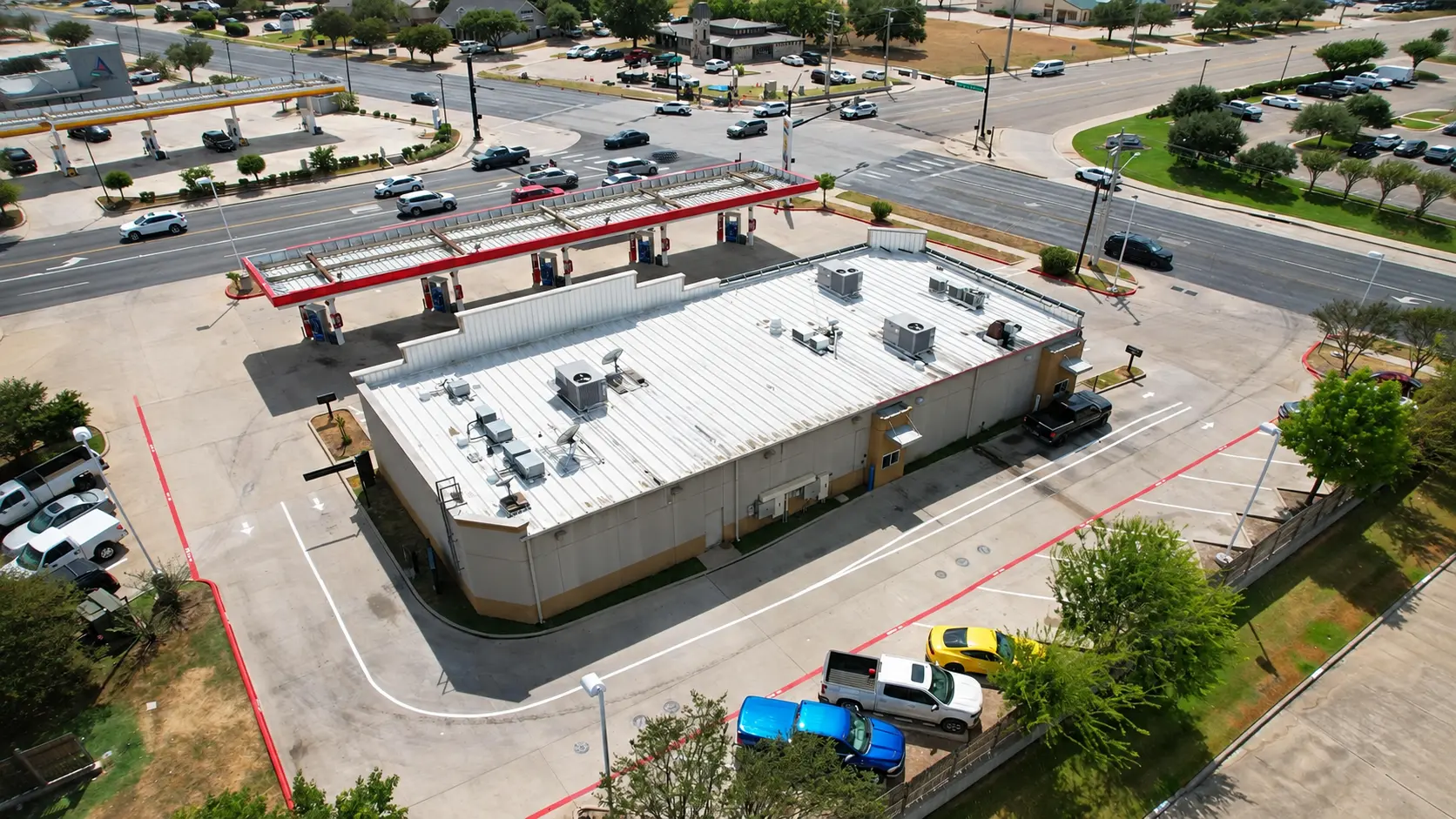
How much should you budget for parking lot maintenance? Start with three groups of costs: work you do every year, work you schedule every few years, and larger pavement repairs. Then walk the property and get quotes for its actual condition. Last year’s number cannot tell you how faded the fire lane is today.

A parking lot budget is easy to overlook. The lines still seem visible from your office window, and cleaning can wait another month. Then a tenant reports confusing parking, an accessible marking fades, or a fire lane needs attention right when you have no room left in the budget.
Here is a practical way to build your 2027 plan.
1. Separate routine work from larger projects
Put each item in the right budget bucket:
| Budget bucket | Items to check |
|---|---|
| Annual upkeep | Lot inspections, power washing, spot cleaning, and small marking touch-ups |
| Scheduled refresh | Parking stall restriping, arrows, curb paint, fire lanes, and accessible space markings |
| Larger projects | Asphalt or concrete repairs, drainage work, sealcoating, and layout changes |
These are planning categories, not a fixed schedule. A busy retail lot may wear differently from a shaded office lot a few miles away. Houston sun, rain, traffic, and pavement condition all affect what needs work first.
2. Walk the lot before entering a number
Bring a site map and take photos. Can drivers see the stall lines at night or in rain? Are arrows clear at decision points? Are accessible spaces, access aisles, signs, and fire lanes legible? Check entrances, drive lanes, dumpster areas, and places where oil or standing water keeps returning.
Count what you find. “Refresh parking lot” is difficult to price or compare. “Restripe 120 existing stalls, refresh two arrows, inspect four accessible spaces, and repaint the marked fire lane” gives a contractor something useful to quote.

Leave a Reply